Por qué PP es la mejor opción para los protectores de brida de agujero de perno
En el campo de los sistemas de tuberías industriales y conexiones de equipos, las bridas con agujeros para pernos son componentes críticos de conexión, y su integridad afecta directamente el rendimiento de sellado, la seguridad y la vida útil de todo el sistema. Los protectores de bridas con agujeros para pernos, que actúan como una "barrera protectora" para este componente clave, requieren una cuidadosa selección de materiales.
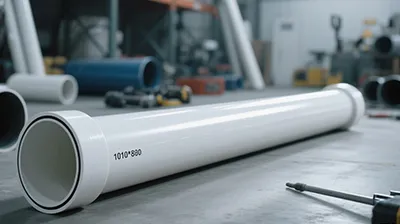
Actualmente, el polipropileno (PP), con su excelente rendimiento integral, se ha convertido en el material preferido para los protectores de bridas con agujeros para pernos, ampliamente utilizado en la producción industrial, la ingeniería municipal y las industrias químicas. Sus ventajas se reflejan en múltiples dimensiones, incluyendo el rendimiento protector, los costos operativos y la adaptabilidad ambiental, proporcionando una garantía confiable para el funcionamiento estable a largo plazo de las conexiones de bridas.
Desde la perspectiva de las propiedades físico-químicas del material, el polipropileno (PP) posee una excelente resistencia a la corrosión, que es una de sus ventajas principales para cumplir con los requisitos de protección de las bridas con agujeros para pernos.
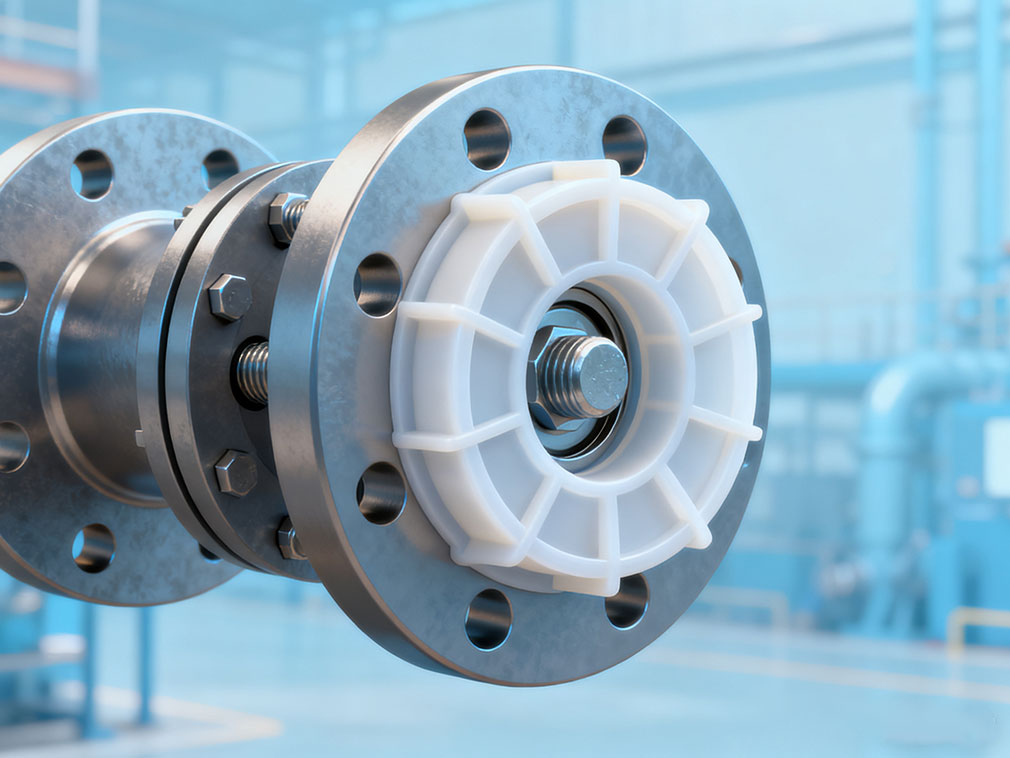
En entornos industriales, las bridas suelen estar expuestas a sustancias corrosivas como soluciones ácidas y alcalinas, medios de petróleo y gas, y aguas residuales industriales. Los protectores hechos de materiales metálicos o plásticos comunes son propensos a la corrosión y el daño, lo que lleva a la erosión y obstrucción de los agujeros para pernos, afectando así el ensamblaje, desmontaje y rendimiento de sellado de la brida.
El polipropileno (PP) tiene una estructura molecular estable y una fuerte inercia química, mostrando una excelente resistencia a la mayoría de los ácidos, álcalis, soluciones salinas y solventes orgánicos (como etanol y acetona). Incluso con un contacto prolongado con medios corrosivos, no es propenso a disolverse, deformarse o envejecer, previniendo eficazmente que las sustancias corrosivas penetren en los agujeros para pernos y manteniendo su limpieza e integridad.
Por ejemplo, en plantas químicas, el uso de protectores de PP en las bridas de tuberías de ácido y álcali reduce las tasas de corrosión de los agujeros para pernos en más del 80% en comparación con los protectores metálicos tradicionales, extendiendo significativamente el ciclo de mantenimiento de los componentes de las bridas.
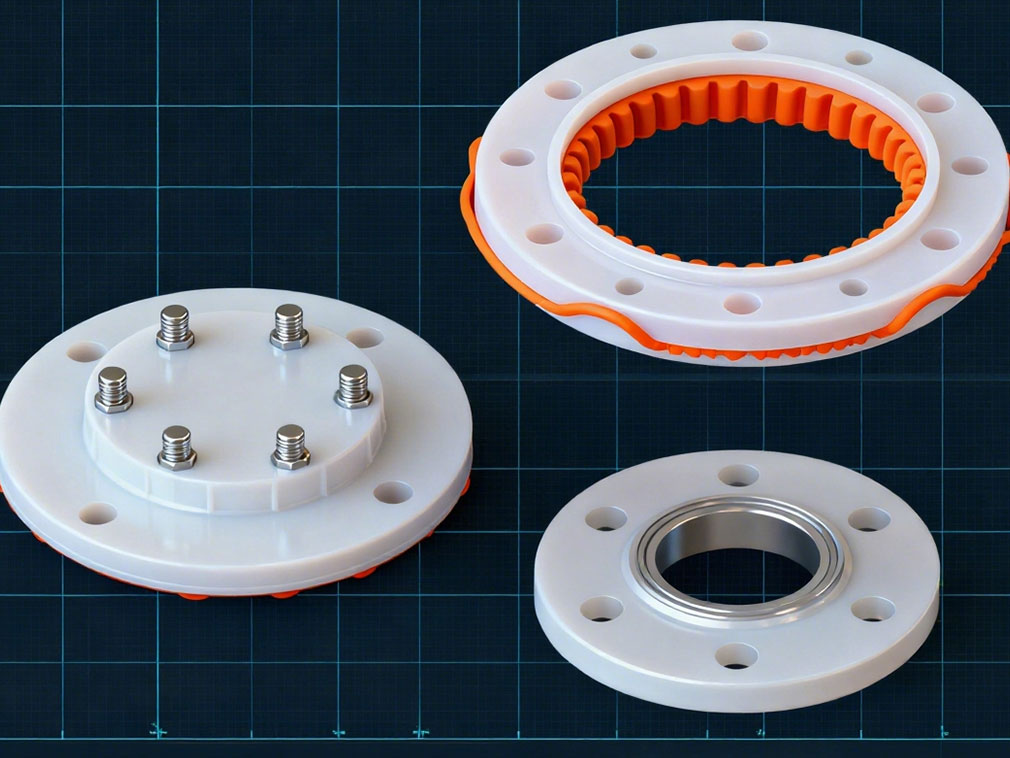
Además, las propiedades mecánicas y las características de procesamiento del PP brindan un fuerte apoyo a la practicidad y adaptabilidad de los protectores de bridas con agujeros para pernos. El material PP posee una dureza y resistencia moderadas, capaz de soportar ciertos impactos externos y compresiones para evitar daños durante el transporte e instalación, mientras que también posee un grado de elasticidad para ajustarse estrechamente a los contornos irregulares de la superficie de la brida, logrando una protección de sellado integral para los agujeros para pernos.
Su baja densidad (aproximadamente 0.90-0.91 g/cm³) hace que el protector sea más ligero, eliminando la necesidad de herramientas pesadas durante la instalación y permitiendo una operación fácil por una sola persona, mejorando significativamente la eficiencia de construcción.
Además, el material PP ofrece un excelente rendimiento de moldeo por inyección, permitiendo que el tamaño y la forma del dispositivo de protección se personalicen para diferentes especificaciones de bridas (como DN50, DN100, DN200, etc.), asegurando una cobertura completa de los agujeros para pernos mientras se permite un espacio razonable para el desmontaje y montaje, equilibrando la efectividad protectora y la facilidad de uso.
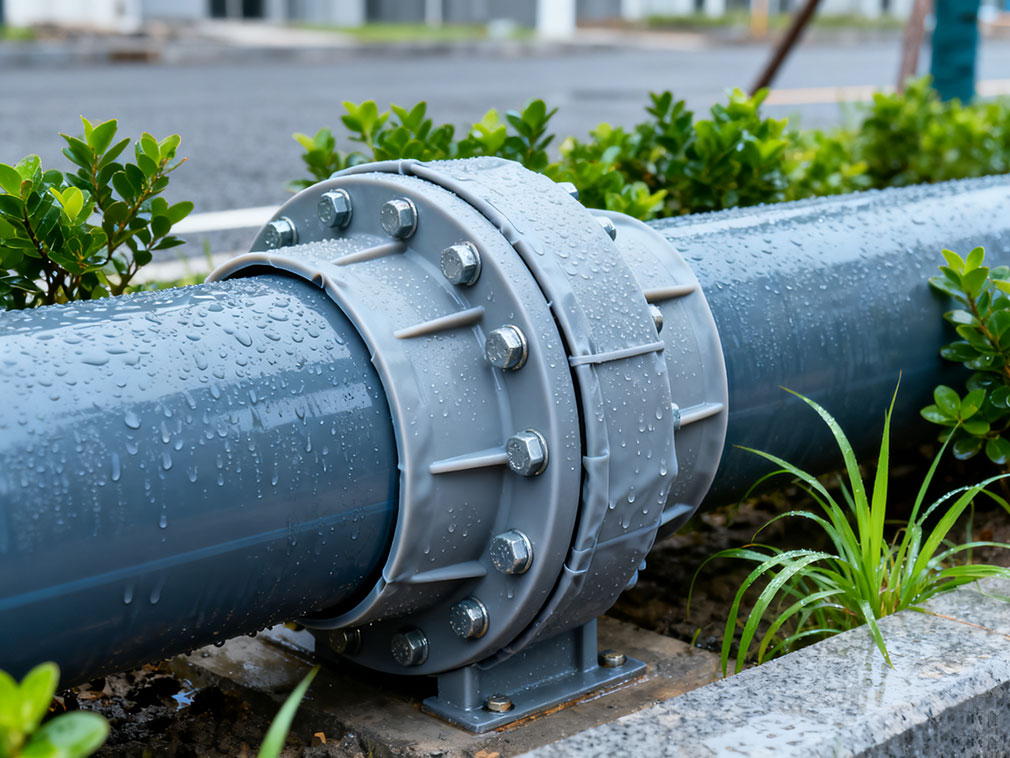
En términos de economía y respeto al medio ambiente, el material polipropileno (PP) también demuestra ventajas sobresalientes, cumpliendo con las demandas duales de la industria moderna de "reducción de costos y mejora de la eficiencia" y "desarrollo verde". Desde una perspectiva de costos, el precio de las materias primas de PP es relativamente estable, y la tecnología de procesamiento es madura y altamente eficiente, controlando eficazmente el costo de fabricación de los protectores de bridas con agujeros para pernos.
En comparación con materiales metálicos como el acero inoxidable, los protectores de bridas de PP cuestan solo 1/3 a 1/2 del precio de los protectores metálicos y tienen una vida útil de 3-5 años, lo que resulta en menores costos operativos a largo plazo. Además, la naturaleza ligera del PP reduce el consumo de energía y los costos durante el transporte, disminuyendo aún más los costos generales para las empresas.
Desde una perspectiva ambiental, el polipropileno (PP) es un termoplástico reciclable. Los protectores desechados pueden fundirse y reciclarse a través de canales de reciclaje profesionales para producir otros productos plásticos, reduciendo los residuos sólidos industriales.
Además, el PP no libera sustancias tóxicas o dañinas durante su producción y uso, evitando así la contaminación ambiental y cumpliendo con las políticas ambientales nacionales, apoyando la producción verde para las empresas.
En aplicaciones prácticas, los protectores de bridas con agujeros para pernos de PP son altamente adaptables y pueden manejar diversas condiciones de trabajo. En proyectos municipales de suministro y drenaje de agua, las bridas suelen estar expuestas a ambientes húmedos. Las propiedades impermeables y resistentes al agua de los protectores de PP previenen eficazmente la oxidación de los agujeros para pernos.
En la industria petroquímica, enfrentando condiciones complejas como altas temperaturas y petróleo y gas, la resistencia a altas temperaturas (temperatura de operación a corto plazo de hasta 120℃) y la resistencia al petróleo del material PP aseguran el rendimiento estable de los protectores.
En las industrias alimentaria y farmacéutica, el material PP cumple con los estándares de seguridad para contacto con alimentos y no contaminará los productos, lo que lo hace adecuado para la protección de bridas de tuberías con altos requisitos de higiene. Además, algunos protectores de PP pueden mejorar aún más su resistencia a la intemperie mediante la adición de estabilizadores UV, agentes anti-envejecimiento y otros modificadores, permitiendo su uso a largo plazo en entornos exteriores y ampliando su rango de aplicación.
Nuestra plataforma conecta a cientos de proveedores químicos chinos verificados con compradores de todo el mundo, promoviendo transacciones transparentes, mejores oportunidades de negocio y asociaciones de alto valor. Ya sea que esté buscando productos básicos a granel, productos químicos especializados o servicios de adquisición personalizados, TDD-Global es confiable para ser su primera opción.